More than 80 North American news outlets publish an Associated Press correction prompted by CAMERA after the wire service falsely reported that the civilian death toll in the Gaza Strip has exceeded 40,000. The scores of corrections are the most that CAMERA has prompted at once from a single wire service story.
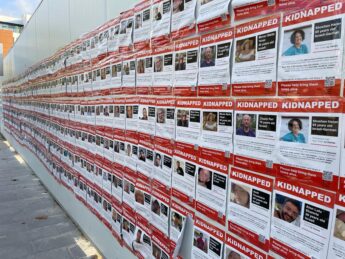
In response to communication from CAMERA, UPI and McClatchy commendably remove an erroneous reference to hostages held in captivity in the Gaza Strip as "prisoners." The hostages have not committed crimes, are not being held lawfully, and are not awaiting trial.
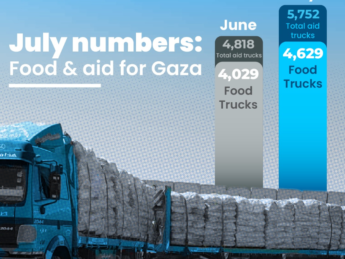
After reporting the fiction of "Israel's blanket blockade of food" entering Gaza, The New York Times' correction conceals the huge quantity of food which has entered the territory, citing "some trucks" as opposed to an actual sum.
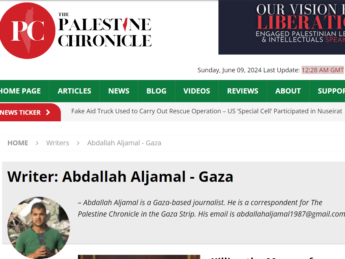
Times of Israel corrects after misidentifying Abdallah Aljamal, a Gaza resident who held three Israeli hostages, as a contributor at Palestine Chronicle. In fact, as correspondent, he had a more significant role at the U.S.-based pro-Hamas outlet.
In dozens of stories, AP committed one of the most egregious journalistic transgressions: misattributing a false quote to a source. Tamar Sternthal explains in Times of Israel how a bogus ICJ quote alleging “plausible risk of genocide” in Gaza found its way into AP reporting, and how CAMERA put an end to it.
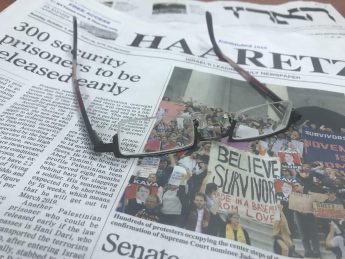
In this second correction of an English-language mistranslation this week, Haaretz clarifies in print and online that an Israeli airstrike did not hit the Rafah tent encampment where secondary explosions started a deadly fire.
"Gaza strikes back at Israel after enduring months of war" was the United Press International headline whose relationship to reality mirrors that of George Lucas' "The Empire Strikes Back" science fiction favorite.
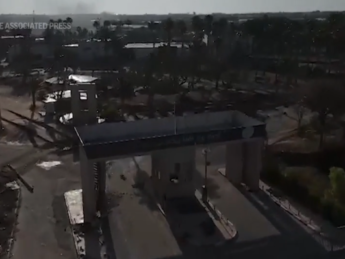
CAMERA prompts correction after Haaretz erroneously reported in English (and not Hebrew) that Israel closed the Rafah Crossing. Egypt, not Israel, closed the Gaza-Egypt crossing.
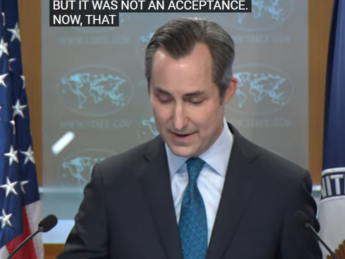
CAMERA prompts correction of a Los Angeles Times article which inaccurately reported that "Hamas had accepted terms of a cease-fire." As the U.S. State Department made explicitly clear: "Hamas did not accept a ceasefire proposal."
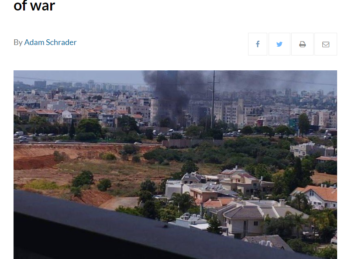
Two days after UPI’s Adam Schrader completely ignored that Hamas fired rockets towards Kerem Shalom even as he blamed Israel exclusively for the humanitarian crises facing Gazans, CAMERA prompts the news agency to cover the terror organization’s deadly attack on the crossing for the first time.