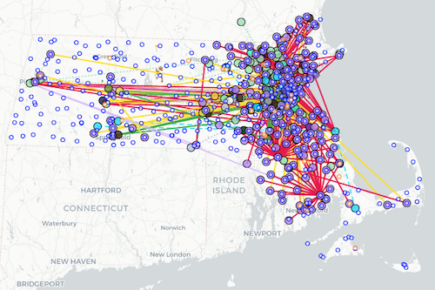
The Boston Mapping Project, launched on June 3, 2022, is the latest variant of BDS poison and reflects the movement's anti-Jewish bigotry. The sinister and thus far anonymous map targets scores of Jewish organizations in New England and has sparked concern about its shocking premise and stated aims – to disrupt and dismantle the Boston Jewish community. It appears, however, to have backfired. The intense pushback by politicians, the FBI and the Massachusetts Department of Justice, has deepened rifts in the BDS movement over tactics -- whether to call openly for "resistance by all means" (that is, violence) or to maintain the pretense of being non-violent, human rights advocates.
Media coverage of Israel is, with growing frequency, more comparable to activism than actual journalism. Indeed, as the Shireen Abu Akleh controversy highlights, journalists are failing to ask basic questions while simultaneously giving platforms and awards to activists masquerading as reporters.
If further proof were needed that the anti-Israel BDS campaign antisemitic, a venomous “mapping” campaign defaming and targeting Boston-area Jews provides stunning evidence.
The anti-Jewish bigotry that characterizes the Boycott Divestment and Sanctions (BDS) movement has become even more apparent as BDS activists have created a local map in Massachusetts to target Jews for being Jews. CAMERA’s backgrounder documents the fundamental anti-Jewish nature of this movement and how it has become a haven for anti-Semites to indulge their racism.
Contained in all the recent slanderous reports accusing Israel of “apartheid” are the claims that various Israeli laws discriminate on the basis of race, ethnicity, nationality, or religion... Yet here we have the PA, which makes a distinction that is clearly not based on citizenship, as are those Israeli laws, but instead on an actual, unjustifiable form of discrimination (the murder of Jews, specifically).
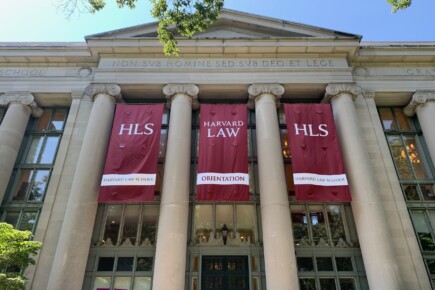
The submission shows that the students involved have failed to comprehend basic concepts of the rule of law. From committing basic legal analytical errors that would get them laughed out of court to getting basic facts wrong, here are just seven of the errors made in the submission.
UK Lawyers for Israel (UKLFI) and the Committee for Accuracy in Middle East Reporting and Analysis (CAMERA) exposed numerous factual and legal errors in Harvard's International Human Rights Clinic's (IHRC) submission to the United Nations that slanderously accused Israel of being an apartheid state.
Quiz time! Can you distinguish BDS from its parody? The stances of the factually and morally bankrupt BDS are virtually indistinguishable from satire. The New York Times gets lost in BDS' smoke and mirrors.
The Harvard Crimson has published an Editorial titled "In Support of Boycott, Divest, Sanctions and a Free Palestine." Despite the editorial's portentous style, as a Harvard alumnus (GSAS 1987) I do feel it’s important to respond in an instructive way, since there seems to be much these Harvard students are unaware of. For example, that it's silly to call for BDS when Israel has agreed multiple times to a Palestinian state, only to have the Palestinians reject it. Maybe these Harvardians should start boycotting certain Palestinians and Palestinian supporters instead.
Amnesty International, having been given multiple opportunities to respond when directly presented with evidence that it inaccurately presented a key figure in its “apartheid” report against Israel, has gone silent.