Hamas has alleged (without evidence) that Gazans have been effectively "evaporated" by science-fiction-like extreme-heat munitions, leaving no recoverable bodies, a charge which the Israeli military has emphatically denied. WIRED, which prides itself on rigorous investigation and technological expertise, took the outlandish claim and put it in a cover story.
The Guardian just published a glowing feature on Omer Bartov and his new book accusing Israel of genocide. Bartov wasn't even challenged when he told the outlet that the "charge of antisemitism has grown hollow" due to its “weaponization” as “a tool to shut people up.”
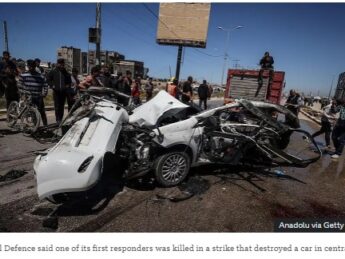
The BBC parroted without qualification a claim from Hamas' civil defense organization that an Israeli military strike in the Gaza Strip killed an emergency medical worker. The network later ignored information that in fact "first responder" Hazem Rami Ali Aidi commanded a cell which carried out Oct. 7 atrocities.
Anti-Israel U.S. Senate hopeful Graham Platner covered up his Nazi tattoo. When NBC profiled Platner's position on the current military conflict in Iran, it covered up Platner's other views of actors in the region. Readers were given no information with regard to Platner's anti-Israel vitriol, appreciation for Hamas' terror tactics, or fondness for antisemitic, Israel-obsessed influencers.
WIRED's game-changing cover story states as fact Hamas propaganda that Israel used a weapon which vaporized bodies into thin air, creating the moment in which Condé Nast's trusted technology magazine loses all credibility.
The BBC continues to ignore the abuse of journalism by terrorist organizations like Hamas and Hezbollah, not least by failing to adequately report on the collaboration between such organizations and media outlets such as Al Jazeera.
Readers who thought they were about to listen to, or read about, a human interest story from Gaza were instead treated to lies about Israel and denial of terrorism.
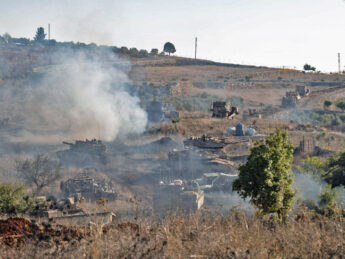
NBC's recent reporting on Lebanon had various layers of bias, including buried facts, omitted facts, and wrong information. The result was a lack of accuracy, balance and context.
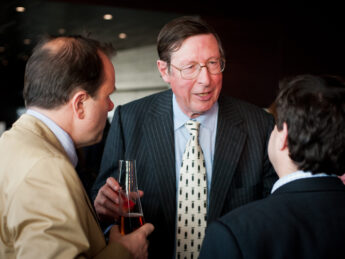
It’s extremely dispiriting that, with all Max Hastings’ erudition, he nonetheless succumbed to mind-numbingly banal cliches and ahistorical arguments about the root cause of violence and instability in the Middle East.