It’s extremely dispiriting that, with all Max Hastings’ erudition, he nonetheless succumbed to mind-numbingly banal cliches and ahistorical arguments about the root cause of violence and instability in the Middle East.
The BBC has shown in recent days that it is absolutely capable of drawing those lines, labelling potential propaganda, and clearly pushing back on guests making unverified claims when it comes to the Islamic Regime in Iran. It would seem that when the conflict involves Israel alone, as opposed to Israel and the US, the rules are applied somewhat differently.
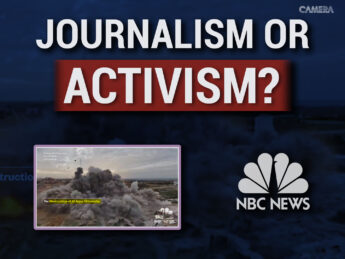
Can Israel’s military be trusted to investigate itself? With its “Video Investigation: How the Israeli military responds to allegations of abuse in Gaza,” NBC News steered its viewers to conclude that Israel has committed war crimes that should be investigated by the world because it has failed to investigate itself. But to make its case, NBC resorted to concealing the facts again and again.
A lawyer for Hamas has been indicted for money laundering to the terror organization. Palestinian Islamic Jihad confirmed the IDF's June 2024 allegation that a Doctors Without Borders employee was one of their own. The Israeli Air Force issues guidance to some of its soldiers about food deliveries.
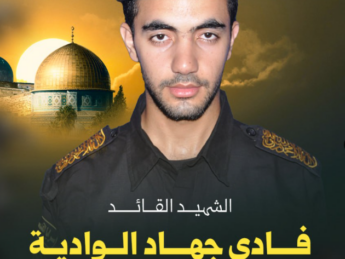
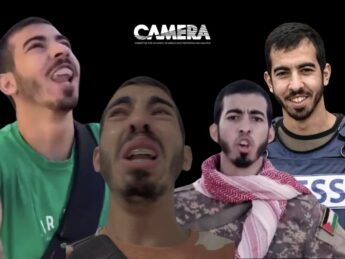
CBS grossly overstated CPJ's death toll for "journalists and media workers" killed in Gaza, and debased its own profession by ignoring that CPJ's own data revealed many of those "media workers" were operatives of terrorist organizations.
ABC News enabled Hamas-laundered propaganda when it reported uncritically on a Duke University-funded medical research study. Two Hamas-allied physicians co-authored the extraordinarily biased study with 11 Duke University students and faculty.
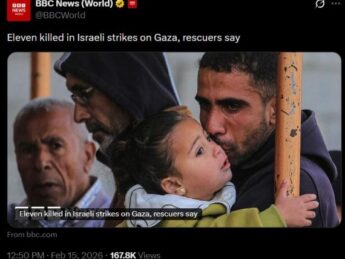
The BBC's pattern of reporting cannot by now be dismissed as isolated cases of errors and omissions. BBC audiences are being serially denied information which would contribute to their understanding of the way in which continued terrorist activity is currently influencing events in the post-ceasefire Gaza Strip.
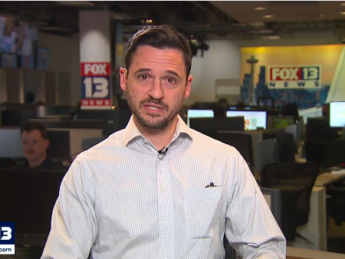
KCPQ reporter Matthew Smith, of Fox News' Seattle affiliate, egregiously inflated the Palestinian death toll during the Israel-Hamas war as "hundreds of thousands.” He also failed to challenge an activist's genocide libel and grotesque invention that "nearly half" the population was "wiped out."
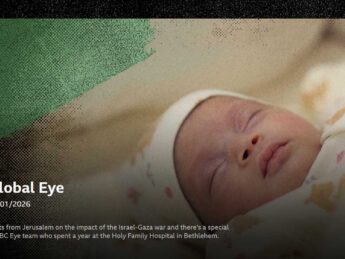
Instead of a powerful and moving film on the struggles of pregnancy and motherhood in war, the BBC has instead aired a carefully constructed attack on the State of Israel.
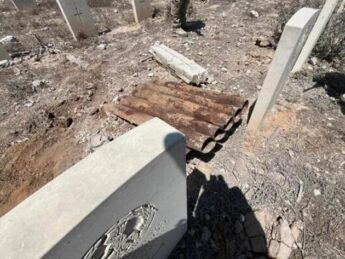
The Guardian's two Allied cemetery stories represent an apt illustration of the outlet’s broader post-Oct. 7 coverage: providing succor for the Palestinian perpetrators of the worst antisemitic atrocity since the Holocaust while doubling down on their hatred of the victims.