The Telegraph recently reported on a CAMERA study of headlines to reports published on the BBC News website’s dedicated “Israel-Gaza war” page in the two years following the outbreak of the war between Hamas and Israel.
Despite the fact that Hamas openly acknowledges that some 200 armed combatants holed up in tunnels under Rafah are its fighters, a Reuters' story today called them "civilians." Following correspondence from CAMERA, the wire service pulled the story.
Recent reports by the Washington Post and NPR highlight alleged Israeli human rights abuses. But as CAMERA points out, the reports only serve to showcase the reporter's ignorance and lack of journalistic due diligence.
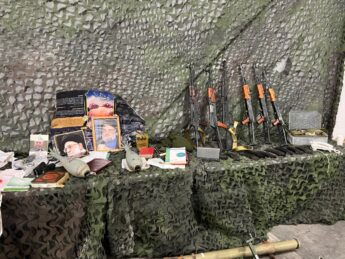
This week: released terrorists rewarded with luxury; Lebanon's failure to disarm Hezbollah risks disaster; a violent antisemite gets prison time; and a throwback to a less-than-prescient speech by former Iranian president Mahmoud Ahmadinejad.
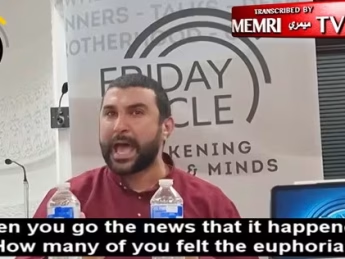
"Celebrate the victory" British political commentator Sami Hamdi enthused just days after Hamas' Oct. 7 slaughter of 1200 Israelis and foreigners. "How many of you felt the euphoria?" AP spins Hamdi's documented euphoria over Hamas' genocidal attack into an unconfirmed accusation.
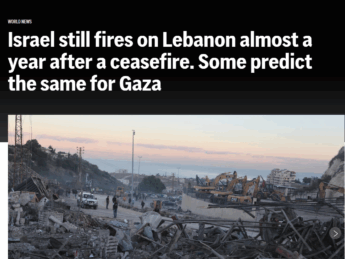
Hamas in Gaza mirrors Hezbollah in Lebanon, and failed media coverage of the former mirrors failed media coverage of the latter. This flawed media coverage, ignoring Arab violations of the ceasefire and casting Israel as an unprovoked bully, is full of mirrors — none of them clarifying.
A recent Washington Post editorial rightly called out Hamas for violating the ceasefire. But as CAMERA documents, other recent Post coverage has missed the mark.
A recent op-ed in the New York Times heavily implied that Israel built Hamas. But as CAMERA tells the Washington Examiner, the terror group's roots go back nearly a century.
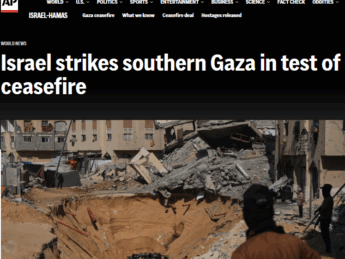
In some journalists' looking-glass view, when Palestinians attack Israelis, the ceasefire is not tested and tensions are not roiled. But when Israel dares to respond to the Palestinian attack? It is only at that point, according to this warped depiction, that the tense quiet is shaken and all is no longer well.
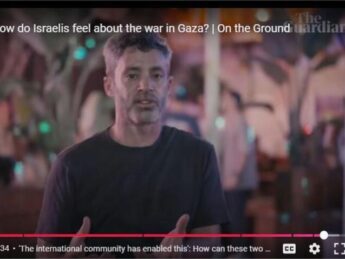
Matthew Cassel’s Guardian film, “‘Our Genocide’,” is an egregious example of a propagandist—under the guise of journalism—telling readers exactly what they want to hear about Israel’s putative villainy.