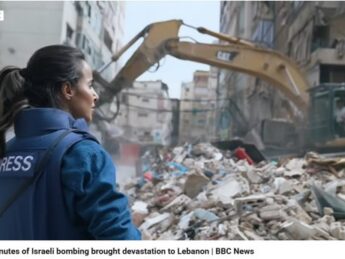
While BBC readers will miss that Israel's north is still under attack, they do get a heavy dose of the broadcaster's false talking narratives including moral equivalency and the baseless claim that Israel targets journalists and healthcare workers.
NPR surveyed the damage in southern Lebanon while escorted by a Hezbollah propagandist. Its report ignored Hezbollah's human shield strategy, attacks on Israel and how the terror group's tactics mirror those of Hamas.
The Guardian upheld our complaint, and corrected the opening sentence of an article falsely claiming that Israel "invaded" Lebanon in 2023, while erasing Hezbollah entirely.
Former Department of Homeland Security official Fayrouz Saad spoke with NPR about her family's connection to Bint Jbeil, Lebanon, following the destruction of her family's "ancestral home" there. Referring to the village as quaint, Saad omitted any reference to PLO control at the time her parents left Lebanon or to Hezbollah presence there in the last several decades.
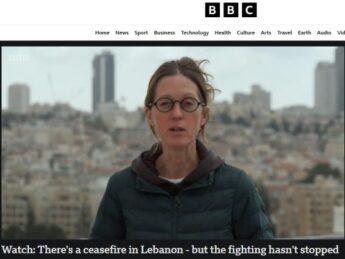
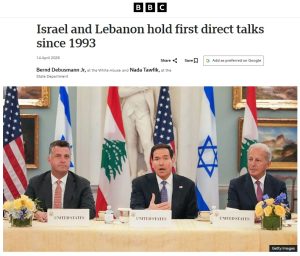
Did Hezbollah accept the Israel-Lebanon ceasefire or reject it? Is the terror group willing to abide by its terms or is it refusing to disarm? BBC can't seem to decide.
NBC relied on commentary from Israel-hating "experts" and ignored Hezbollah's perfidious tactics to produce manipulative reporting that import to Lebanon the "Israel is targeting health care workers" libel from Israel's two-year war against Hamas in Gaza.
In writing about the temporary, extended ceasefire between Israel and Lebanon/Hezbollah, NPR needed only one sentence to subtly manipulate readers into believing Hezbollah's war is only on the Israeli military whereas Israel's war is on Lebanon generally. In doing so, it crafted a narrative and inverted reality.
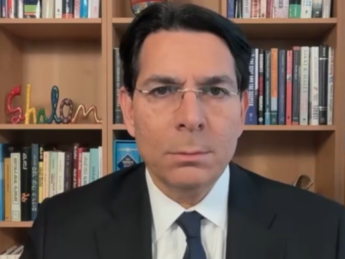
In an interview with a Hezbollah leader, a group that is recognized as a terrorist organization by the United States, PBS posed open-ended questions and engaged in polite, civil discourse. This contrasted sharply with a PBS interview of Israeli Ambassador to the U.N. Danny Danon, which was marked with hostility and accusations masked as questions.