One certainly wonders whether anyone within the FT editorial chain of command so much as raised an eyebrow at Ghattas’ legitimization of the absurd propaganda of the proscribed Islamist terror group.
When media and advocacy organizations serially fail to challenge those who exploit the profession for the purposes of terrorism, they undermine its very foundations and compromise public trust in journalism in general. Adopting that stance is especially damaging to BBC credibility, but the corporation continues to embrace that editorial policy.
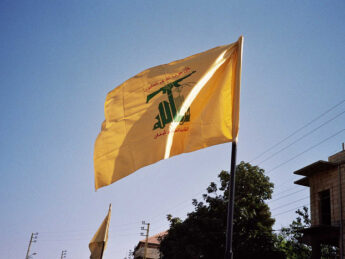
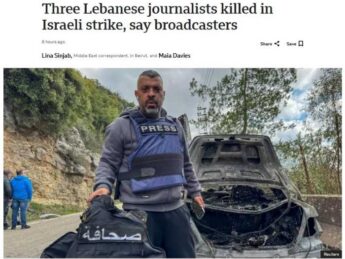
There are two stories here: the one the BBC presents, which is of a grassroots community group reacting to Israeli aggression; and the truth, which is of a well-funded and organized foreign army occupying and controlling Lebanon, refusing to disarm, continuously starting wars with Israel, and engaging in brutal acts of criminal violence against civilians in the region and beyond through its criminal networks.
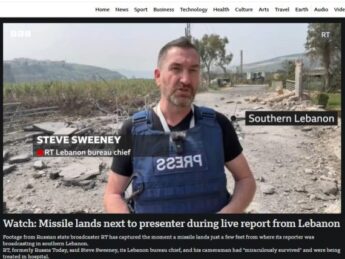
Having the BBC’s costly “anti-disinformation” department provide uncritical worldwide amplification for that already viral Russian propaganda would hardly seem to the be the best way to convince its funding public that the corporation has a “critical role” to play in providing “access to reliable information.”
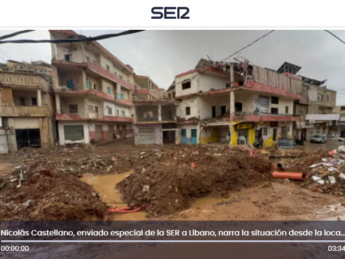
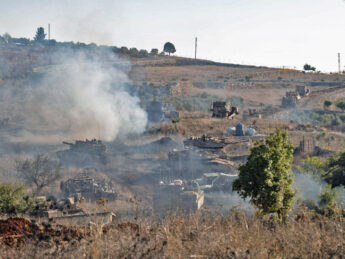
Cadena Ser, Spain’s largest radio network, falsely depicts a fierce battle between the Israeli military and Hezbollah fighters in the Lebanese town of Nabi Sheet as a massacre of civilians.
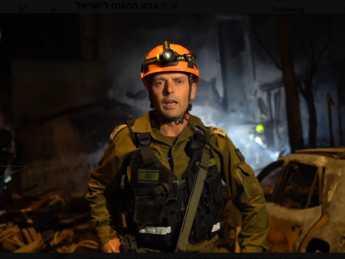
On the border with Lebanon, Israeli residents described their daily realities of instability, sleeplessness, and the constant need for resilience amid war with Hezbollah and Iran. Outside of Israel, International Quds Day drew tens of thousands of demonstrators, rallying in support of designated terrorist organizations.
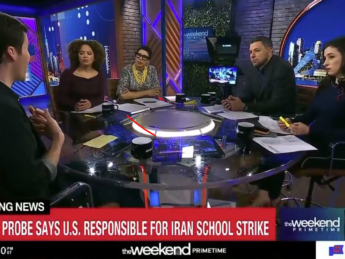
A Mar. 15 MS NOW segment drew a false equivalence between school shootings and Israeli military operations in Gaza, Lebanon, and Iran, ignoring the difference between Israeli soldiers operating in complex urban warfare environments and school shooters that purposefully target children.
CAMERA prompts improved coverage at both ABC and Reuters after the two media outlets erased Hezbollah attacks against Israel, falsely blaming Israel — as opposed to Hezbollah — for dragging Lebanon into war.
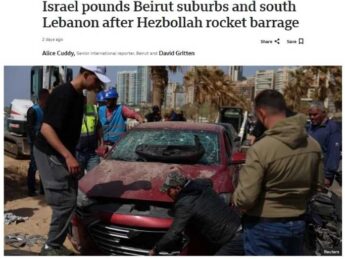
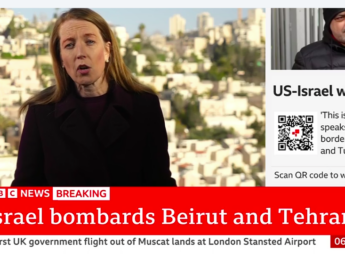
As has also been seen in BBC News website coverage of Iranian regime attacks on Israeli civilians, despite the corporation having a permanent bureau in Jerusalem, audiences have seen remarkably little reporting from the sites of Hezbollah attacks. That lack of coverage stands out even more when compared to the volume of reporting from other locations, particularly Lebanon.
This kind of asymmetric language use is a deliberate framing choice which consistently creates a biased image of the conflict and quietly dehumanizes Israeli civilians, while erasing Arab and Muslim agency. The BBC claims to hold itself to high standards of impartiality, but when its journalists continually make language choices which deliberately distort the audience's view, they fail to meet that standard.