The New York Times published a second article on Israel's alleged plan for regime change in Iran. Just like the first article on the topic, this report too demonstrates serious issues.
Despite the media’s best efforts to deflect, Mr. Graham’s message about the fundamental need to disarm Hamas is impossible to bury, CAMERA's Tamar Sternthal writes in The Washington Times.
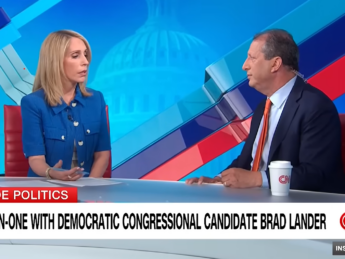
Dana Bash's interview with Brad Lander exposed a wave of media failures, from misrepresenting Raphael Lemkin’s genocide legacy to shockingly redefining Holocaust-era "kapos." This analysis debunks those claims alongside factual errors about Israeli democracy, voting rights, and West Bank security realities.
Post-Oct. 7, one would have at least hoped that there would be some soul-searching among supporters of the Palestinian cause and a reaction along the lines of “this is not how we imagined Palestinian resistance” or a “not in my name” campaign. However, neither distancing nor clarity was to be, CAMERA's Adam Levick writes in JNS.
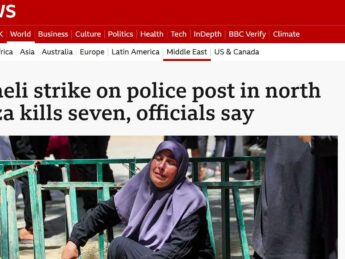
The BBC "Hamas-run" formula, adopted to help inform, continues to obfuscate rather than clarify. Once again, the BBC refuses to lay any agency at the feet of people it increasingly appears to view as purely reactive, uncomplex and incapable of strategic thought.
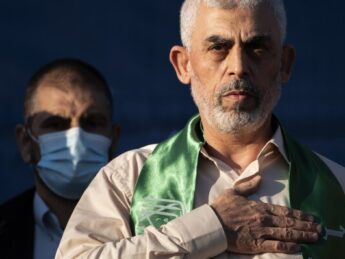
Violent Israeli attacks on Palestinians in the West Bank have decreased by 25 percent since March. Yahya Sinwar's handwritten memo showed he planned the October 7 massacre despite believing Israel would retaliate with all its might, including possible use of nuclear weapons. A British-Israeli dual citizen who served in the IDF was awarded counsel fees in the UK after a court found the attempt to prosecute him to be egregious.
NBC’s veteran international correspondent Keir Simmons should, at this point in his career, possess the tact and journalistic know-how to provide contextual, responsible reporting to viewers. This is especially true when reporting on an issue driving public discourse in the United States, such as the Islamic Republic of Iran. But Simmons’ July 15 report on NBC News Now failed in this regard.