In July so far, NPR aired at least three problematic reports, that shared a common thread – omitting context and hearing from anti-Israel activists to blame Israel for dispossessing and discriminating against Palestinians and stirring conflict. It was a throwback to the NPR of the past.
For years, readers have turned to the Jerusalem Post for context that’s often missing from one-sided, anti-Israel reports in the international media. But recent coverage of a demolition in Silwan consisted of a partisan report from Reuters.
Associated Press delivers a highly selective account of overnight violence in Sheikh Jarrah, omitting the Palestinian firebomb attacks against Jewish homes which apparently started the clash.
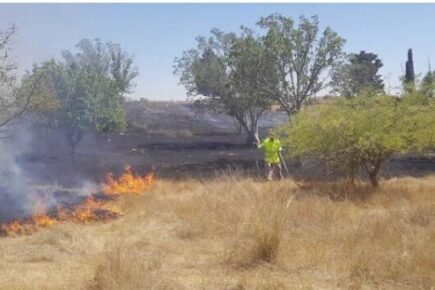
Associated Press fails to make clear the fact that Israeli airstrikes against Hamas buildings in the Gaza Strip were in response to Palestinian arson balloon attacks which sparked some 20 fires southern Israel.
Patrick Kingsley, the British-born Jerusalem Bureau Chief for the New York Times, formerly reported for the Guardian, a paper not known for fidelity to the truth, especially when it comes to Israel. The recent disturbances and fighting in Israel and Gaza have been the perfect opportunity for Kingsley to peddle Guardian-style agitprop to a new set of readers. Kingsley repeats one Palestinian myth after another, and even interviews bigots and Holocaust deniers, giving them space to slander Israel.
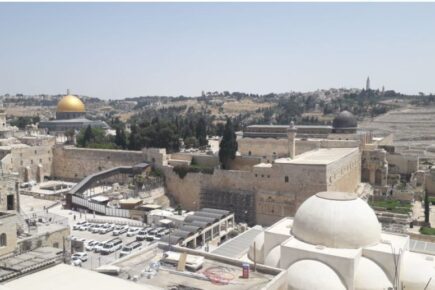
Twice in recent days, NPR's Daniel Estrin's erroneously referred to Israel's 1967 capture of "Palestinian areas" of Jerusalem. No part of Jerusalem was ever Palestinian territory.
In NPR's skewed coverage, only Israelis are "ultranationalists." Palestinian ultranationalists clamoring for terror attacks? They're just breaking the Ramadan fast.
The New Yorker embraces Edward Said's personal fabrication about his family's alleged dispossession, and expands it to the national scale, falsely referring to "the West Bank and Gaza, territories seized from Palestinians in 1967."
With Abbas' cancellation of elections on the pretext that Israel has not said it will permit voting in eastern Jerusalem, some reports mislead on Israel's Oslo-mandated responsibilities concerning Palestinian elections. As for Palestinian electoral responsibilities under Oslo, those simply aren't on the radar.