In the lust libels alleging Israel’s use of widespread rape and sexual assault, every lurid lie is fit for print and worthy of the public consciousness, however ludicrous or unsubstantiated, CAMERA's Tamar Sternthal writes in JNS. Nothing is unspeakable.
O’Connor introduced Hassan Beheshtipour simply as “an Iranian international affairs analyst.” But Beheshtipour was a journalist for Iranian state television and was close to the office of the late supreme leader, Ali Khamenei.
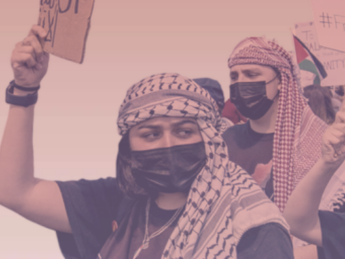
Students for Justice in Palestine supports the killing of American Jews. Passengers from Tel Aviv en route to Slovenia were forced to divert to Croatia. New Israeli defense technology emerges to defend against drones.
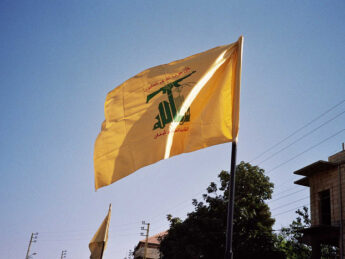
An ABC News brief on the news organization's website reported the death of one United Nations peacekeeper in Lebanon from a mortar attack. The report used passive language and refrained from ascribing blame to Hezbollah.
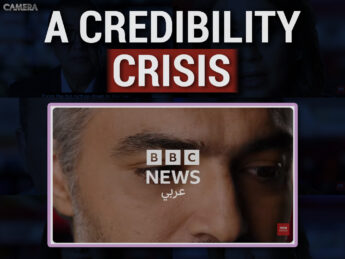
BBC Arabic has spent years compromising the corporation’s credibility, all at the expense of UK license fee payers and the Foreign Office’s budget, rightly losing the “trust” of its funding public - and no damage control PR campaign can cover that up.
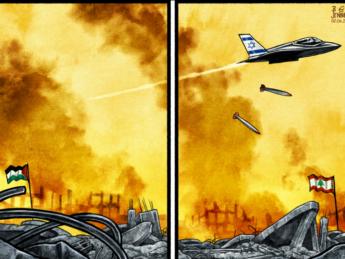
A propagandistic Guardian cartoon about destruction in Lebanon and Gaza erases terror groups entirely, and is a perfect illustration of the outlet's myopic coverage of the war which began when Hamas carried out their barbaric pogrom on Oct. 7.
The New York Times is using anonymous sources in its reports on key events in the US-Israel-Iran war. This leads to some incredible reporting, and not necessarily in a good way.
NPR carefully avoids placing an iota of responsibility for the damage to southern Lebanon on Hezbollah. In a recent story designed to make it appear as if Israel was destroying homes for no reason, one man NPR interviewed told listeners that nice houses don't house weapons.
NBC, ABC and NPR reported last week on Israel's intensified strikes in Lebanon and how they might interfere with a potential ceasefire deal between the United States and Iran. The reports gave only half the story, omitting mention of Hezbollah's conduct.